Critical & Emerging Technologies, explained
What the CET framework is, why it matters, and how it shapes where the United States invests, tests, procures, and scales new capabilities.
Fourteen technologies. One enduring priority.
Critical and Emerging Technologies aren't a passing trend or a single budget cycle's priority. They map to enduring national-security needs that have held steady across changing leadership and shifting headlines. The framework has since been consolidated into six domains, but the underlying priorities remain the same. Here's what they are, and why they matter.
Advanced Manufacturing & Materials
Production-scale additive manufacturing and AI-designed materials.
Digital twins and smart manufacturing, high-entropy alloys and advanced composites, and materials engineered to design scarce critical minerals out of the supply chain.
Artificial Intelligence & Autonomy
Machine-speed decisions and uncrewed systems in every domain.
Perception and sensor fusion, foundation models, swarm intelligence, autonomous command and control, and the interpretability and adversarial robustness needed to trust it.
Biotechnology
Synthetic biology, engineered proteins, and biomanufacturing.
Genome and epigenome engineering, novel therapeutic design, biotic/abiotic interfaces, and neurotechnologies. The same capability underwrites defense against engineered bioweapons.
Communications & Networking
Comms that hold up when the infrastructure doesn't.
Future-generation wireless, optical and fiber links, spectrum access, software-defined radios, and delay-tolerant, path-diverse networking through space and stratospheric relays.
Directed Energy
Lasers and microwaves that beat cheap, mass threats.
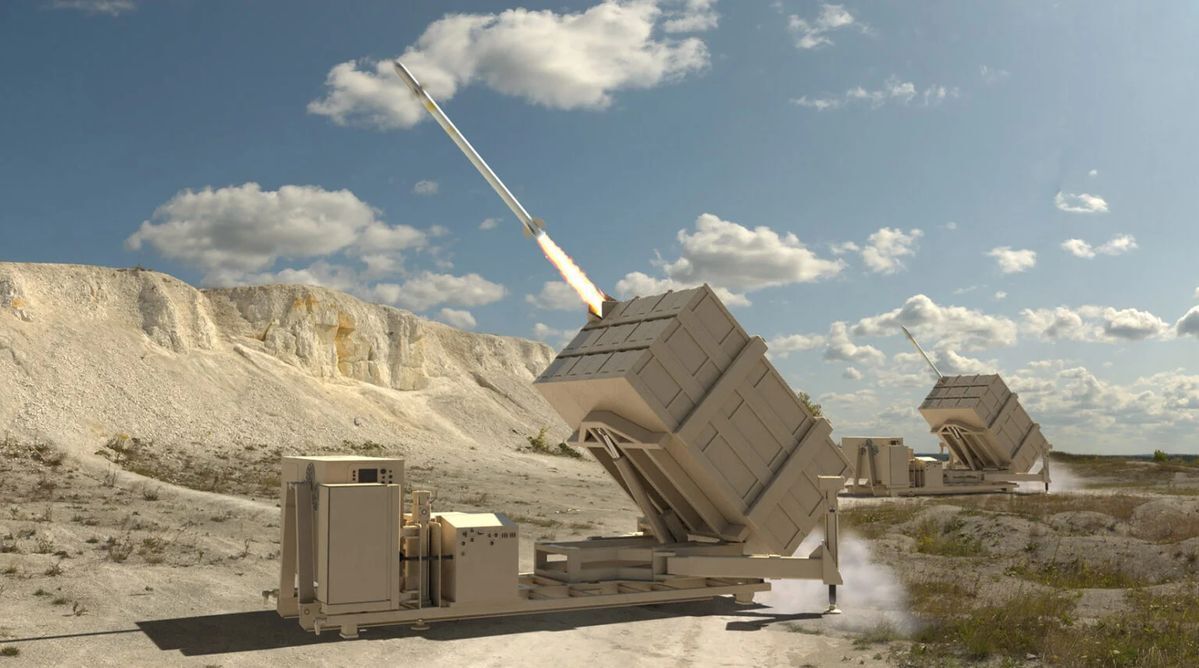
Lasers, high-power microwaves, and particle beams. The appeal is cost-per-shot: stopping a drone swarm without spending a missile on each one.
Future Computing Technologies
Next-generation architectures and edge compute for the field.
Photonic, neuromorphic, and other non-Von Neumann modalities, supercomputing for AI, brain-computer interfaces, and hardened systems for high-security computing.
Hypersonics & Advanced Missile Technologies
Extreme-speed flight, and the defenses against it.
Propulsion, aerodynamics and control, and the materials and structures that survive the heat, plus detection, tracking, characterization, and defense.
Information Management & Cybersecurity
Cyber defense, supply-chain assurance, post-quantum crypto.
AI-enabled and autonomous cyber capabilities, digital identity and biometrics, computing supply-chain assurance, and security for operational technology and industrial control systems.
Nuclear Energy
Advanced fission, fusion, and space nuclear power.
Advanced fission reactors and fusion energy, space nuclear power and propulsion, and the high-temperature, radiation-resistant materials they all depend on.
Positioning, Navigation & Timing (PNT)
Knowing where and when without GPS.
Jam- and spoof-resistant navigation, interference detection, chip-scale atomic clocks and inertial sensors, and PNT that works airborne, subterranean, and underwater.
Quantum Information Technologies
Quantum computing, sensing, and communications.
Named a transformative area: future breakthroughs could reset sensing, communications, computing, and information security outright.
Semiconductors & Microelectronics
Chip design, packaging, and specialized silicon.
Design automation, advanced process technologies, heterogeneous integration and packaging, integrated photonics, and chips built for AI, RF, high-power, and radiation-heavy use.
Sensing & Signature Management
Distributed sensors, data fusion, and CBRN detection.
Advanced sensor systems including distributed apertures, adaptive optics, and detection and characterization of pathogens and chemical, biological, radiological, and nuclear threats.
Space Technologies
Reusable launch, in-space assembly, and cislunar access.
Cost-effective on-demand launch, advanced space vehicle power and propulsion, thermal management, novel orbits, in-space aggregation, and crewed spaceflight enablers.
The questions founders ask us most
Not at all — most founders we back have never used the term. “Critical and Emerging Technologies” (CET) is just the U.S. government’s shorthand for the areas it considers most vital to national security: things like AI and autonomy, secure communications and sensing, counter-drone and directed energy, advanced manufacturing, and more. If you’re building in or around those areas, you’re already a CET company, whether you call it that or not. Mapping your work to where the U.S. is actually spending is our job — building it is yours.
Yes — often that’s exactly it. Some of the most important defense technology is the unglamorous, battle-tested kind: counter-drone, autonomy, sensing, secure comms, electronic warfare, resupply. If your product solves a real operational problem and there’s genuine U.S. demand behind it, that matters far more to us than how futuristic it sounds. Proven and needed beats novel and speculative.
We invest at Pre-Seed, Seed, and Series A. You don’t need a program of record or big revenue yet, but we do want to see that it works outside the lab — roughly TRL 5–9, meaning it’s been demonstrated or used in a real or operational setting — plus a believable path to U.S. customers. If you’re field-tested and U.S.-relevant, it’s worth talking early.
Usually through a few routes, often combined: partnering with or selling through U.S. prime contractors, allied procurement channels, pilot programs with operational units, and innovation pathways like the Defense Innovation Unit (DIU). It almost never happens by cold-emailing the Pentagon. We invest with those routes in mind from day one and help you navigate them — the introductions, the requirements, and the procurement process.
It helps. Technology with both civilian and military applications — “dual-use” — can sell into commercial and defense markets at the same time. That widens your customer base and makes you less dependent on slow government budget cycles. Far from a distraction, it’s often a strength.
They can — and it’s worth getting ahead of. U.S. defense work is sensitive about who sits on your cap table. Funding tied to foreign adversaries — for example, entities connected to China, Russia, or Iran, sometimes called “adversarial capital” — can disqualify a company from sensitive contracts or trigger a national-security review (CFIUS). We help you check this early and keep your path into the U.S. market clean.
A lot of strong technology stalls in the gap between a working prototype and a funded government program — what people in defense call the “valley of death.” Being U.S.-ready means you’ve closed that gap: your product fits a real mission need, it’s structured so the government can actually buy it, and there are no surprises in your ownership or compliance. That’s the difference between a great demo and a deployed capability — and bridging it is much of the work we do alongside founders.
Most of the value is operational. Our team has spent decades inside the defense, national-security, and government world, and we work hand-in-hand with The CET Sandbox — a U.S.–Israel hub that connects Israeli companies with American defense customers and partners. We help you align your roadmap to real requirements, make the right introductions, and navigate procurement, so good technology doesn’t stall on the way to the field.
Take the 60-second quiz
Five quick, plain-English questions. We'll show you which Critical & Emerging Technology you're really in — and how much U.S. demand sits behind it.
Illustrative only. Budget estimates reflect CET Ventures research and publicly available U.S. priorities.
Stay ahead of what's next
Research reports, investment theses, and field notes from our team — covering the technologies, markets, and policy shifts shaping the future of critical and emerging technologies. Delivered to your inbox. No noise.
By subscribing, you agree that CET Ventures will handle your information in accordance with our Privacy Policy.